For Lent this year, I decided to wake up early to do morning devotionals with Inspired: Slaying Giants, Walking on Water, and Loving the Bible Again by Rachel Held Evans. I must confess that I was new to the RHE fan club. Some of my dearest friends have always loved her books, but until recently, I hadn’t wanted to read any faith-based work. Like many people who grew up ardently Christian, in my twenties I found myself underwhelmed by a religion that failed to make space for the world I was experiencing. And like many millennial Christians, 2016 made me wonder if I even belonged in the faith anymore, for if Trump was God’s Chosen, I didn’t want to follow that deity.
But recently there arose other voices on the margins who spoke of a different kind of Christianity, and they introduced me to a faith unafraid to wrestle with Scripture, speak truth to power, and invite all to the table. For the first time in years, I was excited to study the Bible again. Inspired immediately resonated with me because Rachel’s story was like my own. In her childhood, Bible Stories filled her with the wonder of oceans parting, food multiplying, and kids triumphing over giants. But somewhere along the way, the Bible became an impossible set of rules to police her behavior. When her doubts were downplayed as a personal fault, she wondered if Scripture was anything more than an ancient text to be analyzed and critiqued, whose problems outweighed any value to our current lives. But what really spoke to me about Inspired was where she is now with Scripture. With candor and creativity, she recounts the Bible stories, providing essential historical context, social justice minded application, and rediscovering the magic that captured her heart in the first place. Rachel celebrated the fact that the Bible stories are as beautiful and complicated as the people who wrote it and the God who inspired them. And most importantly, it’s a story we’re part of still.
I started following her on Twitter, where I received encouragement that my loved ones and I were still welcome at God’s table even if we felt at odds with conservative Evangelicalism. And I began to have audacious dreams. I thought I needed a PhD in theology before I could publish any writing on religion. When I was 18, I thought the greatest calling I could have in God’s Kingdom was to be a mother (not anything I wanted in the immediate future), be a missionary (also didn’t feel right), or be a youth pastor’s wife (now THAT felt achievable for a hot second). I never realized that I could lead people in a religious context. Now here was this woman, preaching and writing and raising a family, and I felt like I’d finally found my Christian role model! If she could do these things, maybe I could too! That filled me with joy and purpose that I hadn’t felt in my faith for several seasons.
And this famous Christian speaker / mother / writer found time to “like” a random Tweet from an excited follower – I gleefully screenshotted that moment and shared it with my friends!
Someday, I told myself as I devoured Inspired, IF she isn’t busy, I would love to speak with her about our shared stories and how to be true followers of Christ. It’s a testament to her author voice that I already felt like I knew her because of the tender vulnerability in her writing. I wanted to be like Rachel, because she reflected so beautifully what it meant to be like Jesus. And yes, this was after a mere 5 weeks of reading her book!
Why did this beacon of hope and love die while the greedy and powerful linger? I barely knew her, not even in person, and I’ve cried about it three times this week. I feel sadness out of compassion for her husband and the two children she left behind – the youngest’s first birthday is next week. There are no words for that kind of loss. She was only 8 years older than me.
I feel sadness for the loss taken by the Christian community. She was doing such important work, and she would have kept winning souls for the Kingdom for years if she’d been given the time.
I feel sadness that I’ll never get to have that cup of coffee with her.
What an absurd way to end Lent! Easter was supposed to be about new life. So what is this, God?? Why did you strike down your own servant?
“And then…”
That’s how Rachel ends Inspired. We have the stories of the Bible and history. Now, what happens next?
And then I read about everyone else who was impacted by her life. Social media can easily become toxic, but it also has the power to create community that was formerly separated by distance. This week, I followed eight more female pastors and writers. I followed progressive Christian groups who are doing the work of the Kingdom. I followed other regular people wrestling and rejoicing in this faith. #BecauseofRHE became a thread connecting a universe of people, amplifying each individual voice into a beautiful chorus. We are still here, and we are inspired.
And then I couldn’t wait to read the rest of her books. Rachel and I still have many hours to spend together.
And then I thought of several new blog ideas, and seriously considered the possibility of publishing a book on them someday. I started to believe that I could maybe, someday lead in my faith in some way.
“And then, and then, and then…”
None of this makes her death or the acute grief of those closest to her any less; it’s just a reminder that the story continues. She left behind a legacy that has made this world and this faith better. Because of her faith, many are finding joy and courage in being true to who God made them to be. Because of her hope, there are millions of other lights kindled who will in turn illuminate their world with the love of Christ. Because of her love, many lost in disillusionment and pain have been welcomed home.
So now I’m going to go watch the newest episode of Game of Thrones (Rachel’s last Tweet was about how she was sad that her hospitalization was going to cause her to miss the new season), and tomorrow, I will keep trying to live as Rachel did, which is to say as Jesus did. And then, I will keep walking on this windy faith journey story and inviting others to join me.
Because of Rachel Held Evans, we are reminded, my friends: we are not alone.
I was tempted, as I always am when I see Christians wield Scripture to keep LGBT people from the kingdom of God, to write an open angry letter to Mr. Graham. But he’s not my audience, and my frustration, while coming from a place of love and protection, would be wasted yelling into the ether. So this post is not for him. This post is for everyone who read his tweets and felt that familiar pain and fear of whether they would ever be good enough for God.
“But Franklin Graham quoted the Bible…” Indeed he did. I can use out-of-context verses to support my personal convictions too. “Therefore, there is now no condemnation for those who are in Christ Jesus, because through Christ Jesus the law of the Spirit who gives life has set you free from the law of sin and death” (Romans 8:1-2). “You, therefore, have no excuse, you who pass judgment on someone else, for at whatever point you judge another, you are condemning yourself, because you who pass judgment do the same things” (Romans 2:1). “There is neither Jew nor Gentile, neither slave nor free, nor is there male and female, for you are all one in Christ Jesus” (Galatians 3:28). “The Lord God said, “It is not good for the man to be alone. I will make a helper suitable for him” (Genesis 2:18). “Therefore what God has joined together, let no one separate” (Mark 10:9). Anyone can sling singular Bible verses around like pithy fortune cookie sayings. And sure, disconnected Scripture quotes can contain some truth, just as reading a random sentence from Pride and Prejudice might tell you a little about the Bennett family or Victorian era relationships, but it is by no means representative of the whole story.
I find it very irresponsible of a religious leader whose voice influences how a lot of people think about God to quote random Scripture without any of the study that such an important text requires. Twitter is a terrible place to spout Biblical truth, because you cannot possibly give it the gravity and context it deserves. Where is Mr. Graham’s explanation of honor-shame culture in the Old Testament or how marriage and sexuality was understood by the Bible authors? Where is the in-depth analysis of the moral themes of Scripture and the nuances of Christ’s life? Why do Christians apply Leviticus 20:13 and not Leviticus 20:18? (I’d love to see Mr. Graham try to tweet about the latter – look it up.) Where is the historical information about Caligula, the greedy and power-crazed emperor of Rome who committed murder and rape, whose violent excesses Paul’s audience for Romans 1 would have associated with the description of men being “inflamed with lust for one another?” And where is the literary analysis of how Paul spends all that time in Romans 1 talking about the most heinous sinners of the day, only to turn it all around on his audience: “You, therefore, have no excuse, you who pass judgment on someone else, for at whatever point you judge another, you are condemning yourself, because you who pass judgment do the same things” (Look at what a little context / Bible study does to bring out the full power of Romans 2:1.) Where is the application to actual modern-day loving and Jesus-following LGBT people? Mr. Graham, as a religious leader whose voice holds sway over the beliefs of the Evangelical masses, ought to treat Scripture with the study and gravitas it deserves. Or, to put it in meme-form since Mr. Graham wants to discuss complicated Biblical truths over social media, thus isolating an entire group of people from the gospel:
For those of you hurt, even a little, by Mr. Graham’s words, I have Good News for you: He does not get to determine your salvation. The life of Jesus demonstrates that he cared about the outcasts. He specifically connected with those who had been mistreated because of how they were born. His forgiveness is for all people. Pages and pages of the New Testament are filled with the startling truth that God wants FOREIGNERS and WOMEN and PEOPLE WITH DISABILITIES and FISHERMEN in the Kingdom of Heaven. It follows that in 2019, God wants queer people there too (and probably always has, but humans are small-minded and influenced by the prejudices of their cultures). The power of the Gospel is in the revelation that whatever your life situation, God cares about what’s in your heart, and despite the ways we fail and mistreat each other, God continues to pour out love and call us to the Supper of the Lamb. Simply put, although his words may sting now, Franklin Graham has no power or claim over your souls.
The other piece of Good News is that you are not alone. Maybe geographically or emotionally, you feel isolated. But know this: the Kingdom of God is advancing, and God wants you to be a part of it. No human can stop that. I spent Easter Sunday service singing “Christ the Lord is Risen Today” with straight and queer Christians. We worshiped together as one body, voices raised in joy that death cannot triumph over love. These communities exist, and they are growing and thriving. The Holy Spirit is working through them to bring the gospel of God’s love to the world. And if you live in a place where you cannot physically get to that kind of community, try looking for groups online, or start your own. Or message me. You are part of my community. And if you’re still feeling down, imagine Franklin Graham getting to heaven and realizing he has to spend eternity with MANY GAYS, and when he asks Jesus how such a thing is possible, Christ quotes:
34 “Then the King will say to those on his right, ‘Come, you who are blessed by my Father; take your inheritance, the kingdom prepared for you since the creation of the world.35 For I was hungry and you gave me something to eat, I was thirsty and you gave me something to drink, I was a stranger and you invited me in,36 I needed clothes and you clothed me, I was sick and you looked after me, I was in prison and you came to visit me.’ 37 “Then the righteous will answer him, ‘Lord, when did we see you hungry and feed you, or thirsty and give you something to drink?38 When did we see you a stranger and invite you in, or needing clothes and clothe you?39 When did we see you sick or in prison and go to visit you?’ 40 “The King will reply, ‘Truly I tell you, whatever you did for one of the least of these brothers and sisters of mine, you did for me.’
Matthew 25:34-40
You are not alone.
**All Bible quotes taken from the New International Version
Content Warning: Discussions of sexual acts (in the context of marriage, biology) and anti-LGBT sentiment in religious contexts
Contextualizing the Origin Story
One of my reasons for writing this blog is to look at the Bible to determine where queer people fit into God’s kingdom. This will be the first of many posts analyzing the Scripture that has traditionally been used to argue why a person must be straight (at least in action) to participate fully in the Christian Church. Since the ancient writers started with Genesis, we will start with the story of creation as well. We also need to begin there because stories about where we came from, or “origin stories,” are fundamental in the construction of our identity, who we are. As Christian writer Rachel Held Evans observes, “Origin stories tell us who we are, where we come from, and what the world is like…when we understand the function of origin stories, both in our culture and in our lives, we can make better sense of those [origin stories] found in Scripture.”
Yet we cannot take those first few chapters of Genesis in isolation. The Bible is not chiseled on stone tablets, but rather a dynamic collection of God-inspired writing that is more like the saga of the Bayeux Tapestry than a single portrait like the Mona Lisa. We can closely study a single small part of it, but we must also consider the details in the context of the whole work as well. The Garden of Eden is the starting point, but the structure of Scripture moves toward a New Earth. New parts of God the Father are revealed through God the Son and God the Spirit. Worship of God moves from following a set of laws meant to keep God’s people separate to recognizing that Christ’s death and resurrection brings salvation to all and introduces new interpretations of the ancient commandments. For example, women go from being equals at Creation, to being property who must spend their periods in a tent, and finally to being leaders of the Church. While “Jesus Christ is the same yesterday and today and forever” (Hebrews 13:8), praise God that WE don’t have to be and that God’s plan moves toward the redemption of all things.
So with that context in mind, let’s examine a specific detail of the Genesis origin story:
“For this reason a man will leave his father and mother and be united to his wife, and the two will become one flesh” (Genesis 2:24).
“One-flesh” as Heterosexual Intercourse: Assumptions and Limitations
Some interpretations of this verse say the “one flesh” union indicates that heterosexual intercourse is central to God’s will for marriage, so same-sex relationships are necessarily excluded. This interpretation of becoming “one flesh” as purely a sexual act assumes a few ideas:
Heterosexual intercourse is one of the most important God-intended outcomes for marriage.
God specifically prioritizes penetrative, penis-in-vagina sex as the divinely-ordained expression of sexuality within marriage.
The male and female are somehow two halves of a whole that becomes complete in marriage.
Because the writers of Genesis only mention “man and wife,” same-sex relationships can never be part of God’s plan for marriage.
These assumptions fall short of how the Bible discusses marriage in other passages and how we are biologically created. It elevates the physical act of sex – and a certain kind of sex – to the whole point of marriage. However, the passages of the New Testament about loving your spouse and the metaphors comparing the church as God’s bride suggest that marriage is about so much more than sexual acts. And anyone who has read Song of Songs (or is aware of how the female body operates) should know that sex itself is about so much more than genitalia fitting together. Only 25% of women can climax during penetrative intercourse alone. Clearly in the way we’re designed, sex and marriage must be about more than one kind of sex action.
Furthermore, the idea that each person can only be made “one” in the act of heterosexual intercourse is equally reductive and contrary to other Scripture. Genesis emphasizes how Adam and Eve were made equally in “the image of God.” Eve was created as a cure for Adam’s loneliness, not because he was somehow physically incomplete without sex. They were not each 50% part of a creation that could only reach its true potential in a reunification of genitalia. Furthermore, Paul writes in the New Testament that in some ways, unmarried people can be more devoted to God because they have fewer earthly ties. If our identity is truly “in Christ alone” first, then we are not incomplete if we haven’t had sexual intercourse.
One-Flesh as a Kinship Bond: Community, Commitment, and a Glimpse of God
If we are complete in body and spirit without some kind of sexual union, then what does “one flesh” mean in this verse? In his book Bible, Gender, Sexuality: Reframing the Church’s Debate on Same-Sex Relationships, James Brownson offers up another possible explanation. He explains that the Hebrew words used for “one flesh” here do not necessarily mean “the act of sex” as our modern interpretation may assume. Rather, the original Hebrew word basar can also be defined as “kin” or “family,” giving us the meaning: “and the two shall become one family,or kin.”
What is the significance of marriage forming a new kinship bond? What is God creating here, and why?
While we are complete creations without marriage, that is not to say that marriage doesn’t create something new. Metaphorically, it’s the difference between cutting a cake in half and then putting the two halves together to say “look, now we have a real circle where before it was incomplete!” Marriage is more like mixing the individual ingredients that make a cake, subjecting it to time and heat, and now you have something entirely new.
So what does this new thing look like? In the first part of Genesis 2:24, the writer notes that, depending on your translation, the man is united to or cleaves unto or holds fast to or clings to his wife, which makes them one family. Brownson explains that the verb for the “clinging” action is dabaq. He explains that the word appears 54 times in the Bible, and none of them are sexual. There is a connotation of “desire,” which can be sexual, but dabaq also refers to Ruth “clinging” to her mother-in-law when her husband dies. The action signifies committed relationships and staying in communion with one another because the Lord says, it is not good for mankind to be alone.
Kinship bonds form new communities. When two people decide to marry, they bring their two families together (including the families related by blood and by choice in our beloved friends), and they become a new family themselves (with or without kids) through their union. The creation of community is a common theme in Scripture – from the “love your neighbor as yourself” commandment for the Old Testament Israelites to Christ bringing Gentiles and women into his ministry in the New Testament. Many of the Bible’s directives concern the greater good of the community. Through marriage, two people have the chance to create deeper bonds that overflow into their combined “family” and bring good fruit to their community.
The one-flesh kinship bond also comes with serious responsibility. Because this is meant to be a powerful, community-creating bond, a deep commitment seems to be required. Jesus and Paul both use the word basar when they reference Genesis 2:24 in the New Testament. Jesus teaches that this bond is God-ordained and meant to last:
3 Some Pharisees came to him to test him. They asked, “Is it lawful for a man to divorce his wife for any and every reason?” 4 “Haven’t you read,” he replied, “that at the beginning the Creator ‘made them male and female,’and said, ‘For this reason a man will leave his father and mother and be united to his wife, and the two will become one flesh’?6 So they are no longer two, but one flesh. Therefore what God has joined together, let no one separate.” 7 “Why then,” they asked, “did Moses command that a man give his wife a certificate of divorce and send her away?” 8 Jesus replied, “Moses permitted you to divorce your wives because your hearts were hard. But it was not this way from the beginning.9 I tell you that anyone who divorces his wife, except for sexual immorality, and marries another woman commits adultery.” – Matthew 19:3-9
Jesus is addressing an ancient idea from Genesis and adding another layer: when God brings people together in the kinship-bond of marriage, that relationship should be entered into as a serious commitment. The bond is ideally meant to be significant and cherished. Additionally, we see a shift away from the polygamy practices of the Old Testament to focus on commitment to one person, and men and women are held as equals in this responsibility. Jesus evolves the idea of marriage into something even better and more profound than it was in the past.
Paul also speaks to the importance of commitment in a basar union. In these verses, sexuality comes back into the conversation, but rather than making heterosexual intercourse as the reason for marriage, Paul situates its significance in the relational unity between married people.
12 “I have the right to do anything,” you say—but not everything is beneficial. “I have the right to do anything”—but I will not be mastered by anything.13 You say, “Food for the stomach and the stomach for food, and God will destroy them both.” The body, however, is not meant for sexual immorality but for the Lord, and the Lord for the body.14 By his power God raised the Lord from the dead, and he will raise us also.15 Do you not know that your bodies are members of Christ himself? Shall I then take the members of Christ and unite them with a prostitute? Never!16 Do you not know that he who unites himself with a prostitute is one with her in body? For it is said, “The two will become one flesh.”17 But whoever is united with the Lord is one with him in spirit.
– 1 Corinthians 6:12-16
At this time, the Corinthian’s had been separating physical and spiritual parts of life. They thought what they did with their bodies was unconnected to their worship of God. Paul writes that what they did with their bodies matters, especially in relationships, because they were creating bonds without agreeing to the commitment. The Corinthians were enacting for selfish reasons what was meant to be a profound union of two lives and families while not actually being true to any of those God-ordained bonds. This one-flesh union also has a divine mandate around it: marriage creates a kinship bond which should not be contradicted by human beings. Humans are commanded to enter marriage knowing the responsibilities and commitments that involves, to themselves and to their community.
Brownson’s analysis on this passage summarizes it very eloquently:
“Sexual union is intended to create a shared and continuing social reality. The Corinthians ignore this, and in so doing they fail to understand the conflicting relationships in which they have placed themselves…We cannot say with our bodies what we will not say with the rest of our lives.” (pg. 88)
We see in these passages a vision of the way things could be, a challenge to take responsibility for the relationships we form with each other, especially this deeply significant bond of when two people form a new kinship.
I would also like to note that there are many people for whom divorce is the right option for their lives, so I can’t presume to speak on those situations. Even Jesus allows for that possibility. Life does not always align with the ideal. However even in divorce, it’s possible for those bonds to the extended family and friends “community” to be so strong that they endure even when the couple is separated. Even if the commitment did not last an entire life, the effects of it can hold fast, through friendships and children and lessons learned. God work all things for good.
Which leads me to my final point about the power and potential of this committed, community-minded one-flesh relationship found in marriage: it helps humans understand the nature of God. The Old Testament prophets use the analogy of marriage to describe God’s everlasting love and dedication to Israel. Paul in the New Testament expands that to include Christ and all of the Christian Church. Although no human relationship is perfect, in marriage God shows us a relationship of pouring ourselves out to one another selflessly and continually making a commitment to one another, like God does for us. Such love has the power to make a community survive and thrive. Brownson explains the significance of these marriage-metaphors:
“As in Jesus’ teaching on divorce, the one-flesh language here is taken far beyond its original connotations of shared kinship, and it is drawn into a vision of the divine life, in which God’s steadfast love and faithfulness embodied in Christ’s love for the church does not mirror human faithfulness but serves as the fountain of light, reflected – even if only dimly – in the faithfulness and care of husbands and wives who live out the one-flesh union day-to-day.” (pg. 100)
The one-flesh kinship bond of marriage has the potential to reflect the very nature of God and teach us the way of the Christian life: love, selflessness, fidelity, forgiveness, community. I find that extremely beautiful.
Implications for Same-Sex Marriages
So we can see that “one-flesh” as a kinship-making bond reveals some of the divine design for marriage: it creates community that flows from and beyond the couple; it expects a serious commitment of life and body; and it reflects the nature of God through selfless love and faithfulness. Any kind of sexual action should be considered within the context of that vision, but it is not in itself the purpose of marriage.
So if the language of Genesis indicates a divine vision for marriage focused on creating new kinship bonds and not just heterosexual intercourse, is there room in this design for same-sex couples? Some would argue that no matter how mutually self-giving, committed, and community-enriching a gay relationship is, their marriage cannot be God-ordained because of the first part of Genesis 2:24. “For this reason a MAN will be united to his WIFE,” the argument goes. “If God wanted men to marry men, He would have said that in Genesis.” Does the Bible’s overall vision for marriage require that it exclusively be male and female? Or, if the “one-flesh” language indicates a divinely-designed way for humans to situate our desires in the context of life-bonds, could God also extend that holiness to same-sex couples?
Here we must return to studying the Bible like an English teacher. Brownson argues that we must be careful assuming what was “normal” in the Bible is necessarily the “normative” standard God has given us. We are each affected by the prejudices and limitations of our cultural norms. To discern what is normative, what is God’s ideal, in the Scriptural stories and instructions takes time, study, and openness. We must be willing to apply what we read to our knowledge and lived experience. Or as Brownson explains:
“When we encounter questions and issues not contemplated by the biblical writers, we must not allow the limitations of the experience the biblical writers to be used to deny the truths that evidently lie before us.” – Brownson, pg. 105
What is normal in one culture or time in history is not necessarily normative, or the basis of our moral decisions. I’ve become skeptical of whether we can assume that it’s impossible to have a godly same-sex union simply because that was beyond what Genesis’ writers could have imagined for their world.
During the writing of the Bible, it was part of the cultural assumption that the sky was made of a firmament, or a big tangible dome that kept out a bunch of water from crashing into the flat plane of the earth. That was a normal worldview, as was the assumption that marriage must be polygamous, pre-arranged, and patriarchal (in which women were treated like property). And like a patient Father to inexperienced children, God met people where they were, such as when God provides a king because the Israelites begged for a ruler like the other nations.
However, throughout the Bible, God also seems to challenge cultural human norms, such as when God chooses a prostitute to win a battle, or a farmer to be a ruler, or a cross instead of military conquest. God, it seems, if often ahead of what we can imagine. Divine will speaks through the people we least expect and invites those rejected by cultural norms to a seat at the table. God’s normative standard seems to be one of redemption and often surprise. I wonder if God is working in incredible ways in the LGBT community, and Christians are missing it because it isn’t in the place or form we assumed.
The assumption that because male-female marriages were the “normal” kind of union in the Old Testament are therefore the only kind of marriage union that can ever be blessed by God, lacks a nuanced study of Scripture and a limited view of God. Just because gay relationships aren’t mentioned in Genesis doesn’t mean that in 2019 they can’t have a God-designed basar relationship. If we observe a relationship that fits with Scripture’s emphasis of kinship, commitment, and sacrificial love, I think it’s even quite arrogant of us to tell God (and God’s people) that they can’t possibly be living out God’s will simply because the Bible writers didn’t explicitly include that kind of relationship.
As I celebrate Easter this weekend, I’m reflecting and rejoicing in the ways that God still speaks through Scripture and through the world. Praise God that Christ chose the path we did not expect and chose to redeem all of us through the ultimate display of self-sacrificing love! The stories of Holy Week remind us to be open to the ways God is working, to practice and accept self-giving love, and to celebrate that God’s plan is to make all things new.
You are not alone. Sources
Bible quotes taken from The New International Standard Translation
James Browns – Bible, Gender, Sexuality: Reframing the Church’s Debate on Same-Sex Relationships.
Rachel Held Evans – Inspired: Slaying Giants, Walking on Water, and Loving the Bible Again.
In coming to terms with my sexuality, I wish I could say this was my experience:
“COMING OUT OF MY CAGE AND I’VE BEEN DOING JUST FINE”
That is a free, happy doggo right there, stepping out hopefully of his own volition! In reality, my coming out felt more like this:
“BLINDED BY THE LIGHT!”
My parents found out I was bisexual before I was ready to explain on my own terms. I definitely have not had as traumatic experiences as some LGBT people who are outed. Although my parents struggle to grapple with that part of me, they have never disowned me and continue to love me. But the hurt and fear I’ve felt are also valid experiences which have helped me develop empathy for those who have it harder than me. I decided to go social-media public about being a bisexual Christian because I felt like if I could help one person feel less alone, or help someone navigate their born identity and their chosen faith, it was worth it.
But I get ahead of myself. How did a kid who believed in Jesus and believed homosexuality was a sin grow up to be an adult who still believes in Jesus and yet is writing a blog about being a queer Christian? As it’s said in Gaelic, Fado – once upon a time. Gather round for a story. This is a story about growth, fear, and learning what’s worth fighting for. It’s a story I’m nervous to share because it’s about me and therefore makes me vulnerable. In English class, it’s called a personal narrative. In church, it’s a testimony. Sharing our life stories has the power to break down walls, create community, and help us figure out how to be human. I offer up my story to help with that Great Work, “being confident that He who began a good work in you will carry it on to completion” (Philippians 1:6 NIV). Take from it what you will.
“Representation Matters”
When I was a kid, my experience with gay people didn’t involve any kind of fire-and-brimstone “God hates fags” theology – although some people in my hometown have verbally said as much. Rather, my upbringing as far as sexual orientation was concerned was marked by an absence of queer people or voices (with a few key exceptions). We just didn’t talk about it. And in the 90s, there wasn’t a lot of representation in media either, at least not in the shows I was watching. Soon after I had “The Talk,” I asked my mom what “homosexual” meant (not sure where I heard the word, maybe the Bible?), and she gave me the honest answer of “people who have sex with the same gender.” I got the impression it was a sin, and since sex in general sounded gross at the time, that was the end of it for a while. (It didn’t occurred to me that gay could also be a romantic relationship, like the Disney-movie endings I loved so much.)
The first gay person I was aware of was Sir Ian McKellan. I wasn’t sure how to take to that because I ADORED The Lord of the Rings movies. Someone who played Gandalf HAD to be a good person right?
Then in middle school, my friends passed around Tamora Pierce’s books. These were the first books I’d read that discussed sexuality in general, and in a very healthy and age-appropriate way. Strong female characters openly discussed sex and whether they were ready for it. They made good and bad decisions and grew from their experiences. The romantic plot lines were also secondary to the main plot, where young women (as main characters) were sword fighting, doing magic, being spies, and generally kicking ass. These books are also significant because one of the heroines was into girls! GASP. I was scandalized and yet also intrigued (foreshadowing).
Another book series that has made the biggest impression on me of any literature apart from the Bible and The Lord of the Rings was theJacky Faber series. A fiery female pirate singing and dancing her way across several continents and using her wits to survive and thrive in a patriarchal world? Jacky was my friend and my hero. Notably for this post, she was acquainted with several gay characters (and is a bit queer herself), one of whom was one of her most trusted and faithful friends. Again, I encountered a complex, decidedly virtuous queer character, adding to a growing suspicion in my young sheltered mind that maybe gay people are good people too?!?!
In high school, I was a Theatre Kid, so of course it was only a matter of time before I started belting “La Vie Boheme” in the car with my friends. This was the first time I encountered the word “bisexual,” but unfortunately it was in the stereotype of a horny person who just can’t be a faithful partner. Despite its problematic depiction of people who like more than one gender, Rent also introduced me to two people in a loving, committed gay relationship through Collins and Angel. It didn’t look any different from the romantic straight relationships I’d seen except they were even MORE kind and mutually supportive than some hetero couples.
Of course I’ll always moo with you Maureen, but I think it’s important to note that bi people can totally be in committed relationships, no tango necessary
Like cracks appearing in a wall, even these few examples of queer representation began to challenge my perceptions of the world in several significant ways. One, it taught me that gay people existed when I was living in a religious culture that preferred to ignore them. Two, I discovered gay people were, for the most part, like straight people (ANOTHER GASP). They loved and lost; they felt brave and scared; they were good friends. It’s such a basic revelation, but because I was invested in these gay characters, I began to stop viewing actual gay people as “the other.” And three, I was introduced to the way prejudice manifested in harm to queer people. What if I had been told that I was forbidden from pursuing my feelings for my boyfriend at the time? I would have felt heartbroken. John Higgins, one of the heroes of my beloved Jacky Faber series, was forced to hide that part of himself so people didn’t kill him for it. Angel was honest about who they were, and they experienced both verbal cruelty and physical violence for it. I started to understand some of the injustices specifically experienced by gay people simply because of who they loved.
“Love the Sinner, Hate the Sin”
Now, I wish I could say this overcame years of anti-gay indoctrination and the geography of small-town prejudices, but my own words from that time of my life tell me otherwise. I laughed at homophobic jokes and stereotypes. I didn’t support gay marriage. And then there’s this fascinating and mortifying letter (circa 2006) I recently found to a friend who openly supported gay people. Teenage me writes: “As far as the whole homosexuality thing goes, it is wrong for people to shun/hate them. It is wrong for people to do that to anyone. However, I cannot condone [gay people’s] behavior. If the creation of mankind isn’t enough evidence to what God intended concerning the sexuality of the human race (male and female), there are verses in Romans saying that it is, in fact wrong. If you have a problem with that take it up with God. He said it, not me….God does love everyone. He hates sin. He’s just waiting for people to accept the free gift and live in the light. He doesn’t hate homosexuals; but I don’t think he’s ok with their actions.”
YIKES. I could spend a whole separate blog post dissecting this writing sample from my own 16-year-old brain, and how I was regurgitating word-for-word the arguments I’d heard in my religious community in the most obnoxious way possible. I’m ashamed that I believed this. I had no idea that while I claimed to care about gay people, I was saying such hurtful things. But this story is ultimately about how change happens. Seeing a little representation clearly wasn’t enough to break down the barriers of beliefs that had been reinforced for my whole life. To do that, I would have to leave that environment and actually go out and meet people.
“The World Only Spins Forward”
“It’s a dangerous business, Frodo, going out of your door. You step onto the road, and if you don’t keep your feet, there’s no knowing where you might be swept off to.” –The Fellowship of the Ring
Like a hobbit discovering that Middle Earth was so much more than the Shire, I embraced college with arms wide open. I was inspired by everyone I met. I devoured literature and theory. I had thrilling and painful adventures. I fell in love, and cut my hair, and learned to play Betrayal at the House on the Hill. When you live like that, open and unafraid and eager to learn from people, it does indeed sweep you off to a place you never even knew existed.
I remember one conversation at the beginning of college with a girl who had become a fast friend. We were sitting on the roof of one of the campus buildings one night, talking about how being gay had to be a choice, because we could make out with girls and even wanted to sometimes, but we chose not to do that. I genuinely assumed everyone was distracted by Kate Beckinsdale’s leather-clad body in the Underworld movies and didn’t every girl want to kiss girls after a few drinks. It wasn’t until several years later one of my truly straight female friends explained, “No really, I’ve never wanted to kiss a girl. I’m not attracted to them.” Only then did I begin to get the sneaking suspicion that I was, in fact, not straight.
For the longest time I thought the tingling in my lady parts when I watched The Matrix just meant I wanted to BE Trinity – LOL you sweet summer child, 2008 me
By senior year, I had met enough people and done enough research to be fully supportive internally of gay marriage, but I was afraid of being a vocal ally. When you’ve been raised in one brand of religion for your whole life, it’s difficult to put forth a dissenting idea. And family approval is a hard thing to sacrifice. I didn’t want to see the disappointment and anger in their eyes. If someone asked me, I would tell them my opinions, but I did not speak out about it.
That changed when I was assigned to work on Angels in America: Millennium Approaches for my senior dramaturgy thesis project. It was my job to analyze the historical context of the play and connect it to current events. I was aware of the AIDS crisis from Rent, but researching the 1980s made me understand how fucked up it was that a significant part of the country not only turned its back on a group of its own people in need, but even celebrated their deaths. I had only ever heard what a good president Reagan was, yet his administration’s refusal to acknowledge the existence of queer people resulted in unnecessary fatalities. I learned about people not being allowed to see their partners in the hospital and the protests of the Act Up movement to try to bring awareness to the issue. And I went from being passively supportive to being fired up about the injustice.
Not a quippy meme, just good art and history you should know
Dramaturgy isn’t just about studying the history of a play, though. It’s also about finding ways to engage your community in the present. My co-dramaturg and I decided to do special outreach to the LGBT groups on campus and in the city. We got them tickets to the play and asked if they would like to set up tables in the theatre lobby to give information about their organization. I found myself drawn to the religious gay groups. I was fascinated by the idea that these people could be queer without rejecting their faith. I went to a gay-specific Catholic mass, and although it would not have been considered a “real mass” by the Catholic Church, it felt exactly the same as a “normal” service. Apart from the play, I also developed very deep friendships with queer women who were not just Christians but smart people of faith, and this was another game-changer (gay-changer?) for me. However, I didn’t really admit to my own attraction to women as well as men. I had never actually dated a woman, so I thought it wouldn’t count enough to be called bi.
I invited my parents to see Angels in America. I proudly showed them the LGBT groups in the lobby, talking with students and handing out information and free condoms. I was so happy about all the work the whole team had done on the show. Surely, this would change their minds about gay marriage! They sat through the whole show (to be fair, I got them seats in orchestra center, so it would have been its own production to leave). Afterward, I braced for the worst, but my mom simply said, “You know we don’t agree with that lifestyle, but I’m proud of the work you put into the show.” It wasn’t the 180-opinion reversal I’d hoped for, but it was also less severe than I expected. I chalked it up to a win at the time.
“It’s not a sin”
Then, I didn’t bring it up again for several years. It would take me some time to own up to the level of “bisexual.” I remember my first summer of grad school, we were doing a community-building activity that asked people to identify as “straight, gay, or attracted to more than one gender” and I almost raised my hand for the third. I had major impostor syndrome and a misunderstanding about sexuality, because I assumed if I hadn’t dated a girl, I couldn’t be bisexual. I did, however, note the two girls who said they were bi, and I started seeing them as “people I could flirt with.” I even came very close to kissing one of them once, but it was probably for the best I didn’t because I had no idea how to process these feelings yet.
I once mentioned to a guy I was sort-of dating at the time that I was also attracted to women, and he said it was probably because I’d had bad experiences with men. I knew he was wrong but didn’t know how to explain why. (A word of advice from someone who put up with that BS for way too long – don’t be with someone who says stuff like that to you. You deserve to be with someone who listens to you about your sexuality, so don’t stop searching till you find that.)
One day I was writing a paper and messaging a friend (one of those same friends who passed around the Tamora Pierce books back in middle school), and we started talking about how we found women attractive. Suddenly she was saying, “I’m bisexual.” It was like her using the label finally gave me permission and courage to use it too. I told her I was too, and another layer of the wall inside me came tumbling down. I started using that label when talking to my friends and sisters, and I found out I was very much not alone. Two of my sisters would come out to me as bisexual in the next year. Even though I got more comfortable with who I was, I never mentioned it to my parents or publicly because I didn’t think it was relevant enough to risk rejection. I ended up meeting a man (who didn’t care what my sexuality was as long as we agreed on the monogamous relationship part.) We got engaged, so I thought my attraction to women was a moot point. Why cause unnecessary conflict with people I love?
On a sunny Labor Day weekend, my parents said they were coming to see me for lunch. As we walked in the park afterward, they revealed they had read private messages my sisters and I had sent each other about being bisexual. They were deeply upset and hurt because they saw this as a serious, unnatural sin. There was a moment of revelation when I finally said out loud what I had been mulling over for years: “I don’t think same-sex attraction is a sin.” I should have had this conversation with them years ago because a lot of assumptions and misinformation and fear – the foundations of any wall we build between each other – had accumulated in our avoidance of talking about any possibly controversial issue. That talk was very difficult and to be honest, I don’t know if I would have been able to have it before that point in my life, when I had learned more about courage and had my fiance literally and figuratively with me. I also now had the motivation to speak up. One my first identities was as a big sister, so in that moment I decided if I could blaze a trail to make it easier for my little sis to bring home a girl she loved, I was willing to have the hard conversations with our parents. So we had a brutally honest talk that day, and although I don’t think either me or my parents left that conversation satisfied, a few bricks were taken out of that wall.
That October on National Coming Out Day, I went public about being bi for the first time. I felt a sense of responsibility – I could “pass” in a straight relationship, but people I cared about couldn’t and suffered for it. It was time to wield my privilege for good. I posted on Facebook about being a person who identifies as both Christian and bisexual. Inspired by some of my friends’ transparency about personal issues in order to help other people, I shared that I was open to talking about those parts of my identity with anyone. People reached out: Christians who were afraid God would reject them because of their sexuality; people who weren’t religious asking about my faith; social media acquaintances saying they knew they couldn’t be the only ones! I did receive some negative reactions, including one extremely painful message from someone I love (those are always the people who can cut the deepest). But it was worth it to remind the world (or the part of it I can influence anyway) that Christian queer people ARE here, made by God, loved by God, and deserving of a place at the table of faith.
My favorite bi gif ever
I wish I could wrap this story up by saying that I single-handedly changed everyone’s minds and that all of my family supports gay relationships, but when I reflect on my own journey, it took me years to change ingrained mindsets. I sometimes feel impossibly impatient about creating change, but God calls us to persistence even if it seems like nothing is happening. For example, I had a respectful conversation about transgender people with my parents. We didn’t quite agree, but we certainly understood each other better by the end of it, and no one walked away or burst into tears. I could not have done that even 2 years ago.
I believe that people can and do change for the better. Looking back through my own story, there were several forces that broke down the walls. First, I had to see stories with queer people. This is why representation matters. Then I had to learn about the historical and current experiences of queer people. You can’t act on what you don’t know. I had to meet queer people and listen to their stories. I had to make it personal. Finally, encouraged by all of the other stories I had discovered from my fictional characters, historical figures, and beautiful friendships, I was able to embrace my own story fully.
If you would like to share your own story, feel free to message or email me. If we live in the same city, we can have a coffee or a beer or a walk and talk about it. I believe sharing stories has the power to break down walls, and beyond the barricade is a world where we can find freedom, authenticity, a beautiful diversity of community bound by a respect for their common image-of-God individual worth. So I share my story, such as it is, to perhaps bring us a little closer to that New Earth.
The stakes of LGBT+ full participation in the Christian church are high. It’s causing people my age to leave the church. Family and community rejection can result in higher rates of mental illness and even suicide for LGBT+ people. At the minimum, it’s caused emotional hurt to people we are supposed to love. Furthermore, from an eternal perspective, if we believe that we’ll have to give an accounting to God someday, we should consider how we address LGBT+ inclusion very carefully. Even from an earthly point of view, to quote the musical Hamilton, “History has its eyes on you.” Are we on the right side of history?
I can tell personal stories of the pain caused by the way the Christians have treated LGBT people. (Just the other day, someone responded to one of my blog posts by saying that the idea of LGBT+ inclusion in the church is “pure evil, homie.” And while I laughed it off with my support group of friends, I’m a 28 year old woman who’s had time and therapy to work through the issues of my identity and faith. Imagine a young person hearing that the honest love they have for another is “pure evil” from someone who was supposed to be part of their spiritual family. Yikes.) I can also present statistics and research about the damage the Christian Church’s traditional stance has caused the LGBT+ community. However, in discussing LGBT+ inclusion with Christians, my appeals to both data and empathy often fall short persuading anyone. I’ve found otherwise compassionate and reasonable people tell me they just can’t support gay people participating fully in the Christian church because “the Bible says it’s a sin.”
In order to take this conversation further, it’s clear that we will need to study what the Bible says. Easier said than done for a 2000 year old text that’s been translated through centuries of language and cultures! That’s not to say that Holy Scripture isn’t God-breathed or relevant to our 2019 lives. It does require modern Christians to carefully study the context and compilation of Scripture before we start flinging around quotes that affect people’s lives and well-being.
I’ve found a significant gap in the LGBT Christian inclusion conversation involves not what the Bible says, but about how we read and think about the Bible. For example, most Christians seem to agree that “love your neighbor as yourself” is an important mandate. Similarly, most Christians disregard the command to consider an abomination “everything in the waters that does not have fins or scales,” because who doesn’t love a good shrimp scampi? However, when we talk about Scripture that alludes to same-sex relationships (ROMANS 1), Christians who read the same exact text have very different interpretations. To understand why, I’m going to apply some of what I learned as a reading specialist teacher to examine how we comprehend anything we read, and then apply that to how we might read and understand Scriptures. We’re going to study Scripture like an English teacher!
Comprehension Skills
One of the first things any teacher learns is Bloom’s Taxonomy, a chart that shows the different levels of knowledge. Higher levels of the pyramid indicate depth of understanding about a topic. Teachers use it to generate questions and assessments to gauge how well students understand what they’re reading.
I worked as a teacher for four years who specialized in teaching reading skills to students with learning disabilities. Through this experience, I learned that the process of reading is so much more than your eyes and brain recognizing marks on a page. That’s just the first level of Bloom’s Taxonomy. Two students could read out loud the same passage quite accurately, yet when asked to answer comprehension questions about what they had just read, they could have very different answers. This is because reading is more than just fluency (the ability to sound out and identify words); it also requires comprehension (the ability to understand AND apply what you have read). True understanding of a text involves incorporating all levels of the Bloom’s pyramid.
Sometimes in English class, there could more than one correct answer. For example, is To Kill a Mockingbird about racism or coming of age? Students could write an A+ essay arguing for either theme. A truly excellent essay would explain how both are intertwined and how racism affects Scout’s coming-of-age. Similarly, sometimes in the Bible there is more than one good interpretation: is the feeding of the 5,000 about being generous or about God’s provision? There is solid evidence for both readings, which is why we can reread passages of the Bible at different points in our life and take away different meanings. Personally, I love that about the Bible (and reading any good book). There are layers, so there are always new things to discover.
But for some questions about comprehension, there are answers that are more right than others. Suppose I asked students: “What does Atticus mean when he says ‘it’s a sin to kill a mockingbird?'” One student says it means we shouldn’t shoot animals, and another student says we shouldn’t shouldn’t imprison innocent people. Why does the second answer display a more correct understanding of the text? And what are the components of comprehension that lead to that more accurate and thorough answer? My job as a reading teacher was to figure out how to teach good comprehension skills and to figure out where comprehension was breaking down so that I could fix the misunderstanding. Through both lived experience and the study of educational theory for my Master’s Degree, I learned some specific processes that are necessary for comprehension.
Historical context: Before they ever even read the first sentence of the actual book, I would have my students spend some time studying the historical setting of the text. To understand the world of To Kill a Mockingbird, students need to understand Jim Crow laws and the horrible ways white people treated black people in the 1930s Deep South. They should also know about the Great Depression to fully understand the setting and characters.
Vocabulary: This involves even more than simply knowing what a word means. Many words have different meanings now than they did 50 or 100 years ago. A lot of words have multiple meanings, depending on the context. Teaching vocabulary involved learning Greek/Latin root words (bi-cycle = “two wheels”), how to use context clues, how to look up words, connotations (the feeling a word gives you) vs. denotations (what the word literally means), and word families (all the different endings to a word that change the meaning of a sentence). For example, at the beginning of To Kill a Mockingbird, Scout describes the mysterious Boo Radley with the phrase “inside the house lived a malevolent Phantom.” If I were teaching the word “malevolent,” I would ask if students if they recognized any root words (“Mal” means “bad”). Does this sound like any other words (i.e. malicious, malediction, the evil Disney witch named “Malificent”)? Context clues suggest malevolent is probably a scary or bad thing because it’s describing a ghost. Furthermore, the connotation is evil, not just mean or spooky.
Literary Terms: Similes, metaphors, allusion (making a reference to another thing), hyperboles (exaggerations) – all of these require reading beyond the literal meaning. Using the above example, students should understand that Boo Radley isn’t an actual ghost, but he’s just being described as a ghost because he frightens Scout. If a student spent the whole book thinking Boo Radley was literally a ghost, they might completely miss the bigger theme about not judging people based on assumptions. Studying literary technique is essential to comprehension.
Genre: Is this a poem, a play, nonfiction, science fiction, memoir, short stories, fable, fantasy? We read each of those types of texts a little differently. If To Kill a Mockingbird was in the horror genre, Boo Radley being a Phantom could be LITERAL rather than figurative language. Students needed to factor the purpose and structure of a genre to really understand a text.
Higher-Order Thinking Skills
These strategies helped my students reach the “understanding” level of Bloom’s Taxonomy. But comprehension doesn’t stop in the middle of the pyramid. Now that they had a thorough knowledge of the text, I would push students to apply and analyze. Here are a few of what we would call “higher order thinking skills” in teaching – questions that make you think, not just regurgitate the facts.
Using Evidence: Not all quotes are created equal. If I asked students to “describe Boo Radley” using evidence from the text, I might get a range of answers. Weak evidence would be something like: “Boo saw me run instinctively to the bed where Jem was sleeping.” Technically, the quote is about Boo, but it doesn’t really tell me anything about Boo. It has his name in the sentence, but it’s more about Scout’s concern for her brother Jem. Decent evidence might be: “His face was as white as his hands, but for a shadow on his jutting chin. His cheeks were thin to hollowness; his mouth was wide; there were shallow, almost delicate indentations at his temples, and his gray eyes were so colorless I thought he was blind.” This quote certainly describes Boo in detail, but it is just one piece of evidence. I would want students to pair it with a description of Boo’s character as well as his physical traits. For example, they could use a quote from one of the other characters describing how they should react to Boo Radley’s heroism at the end of the book: “Taking the one man [Boo] who’s done you and this town a great service an‘ draggin’ him with his shy ways into the limelight—to me, that’s a sin….If it was any other man, it’d be different. But not this man.” This quote shows that Boo Radley is a good man, but a shy one. Students should explain why a quote is good evidence, as well as connect it to other quotes and explain the significance to the topic.
Theme: These are the ideas that run through the whole story, the “messages” the author wants us to take away. Any claim of a theme should have strong evidence to support its importance (see point one above). One theme of To Kill a Mockingbird is about not hurting innocent people. Whether it’s their initial fear of Boo Radley, to the jury’s racist verdict of Tom Robinson, to Jem sparing the life of a tiny rolypoly bug, there are many examples about choosing compassion and fairness over fear and prejudice. Students should have a “big-picture” view as well as a close reading of specific quotes.
Author’s Voice: Part of analysis is developing an awareness of how and why the author wrote the text. These questions involve taking all the pieces of information from the lower levels of the Bloom’s Taxonomy and explaining how they fit together to form ideas. Is Scout a reliable narrator? How does Harper Lee use metaphors to create suspense? What themes does Harper Lee highlight, and do you think they’re important? How does she feel about the conditions for black people in the south in the 1930s? Is To Kill a Mockingbird a political book? And of course, the Golden Question: how does this book apply to our lives, our communities, and what’s going on in the world today?
If I really wanted to push for even higher understanding of a text, I would have my students read what other people have written about To Kill a Mockingbird. Engaging with other commentary can reveal information and analysis they had not noticed before. By summarizing and assessing another person’s writing about the original book (“do you agree or disagree with this writer that To Kill a Mockingbird presents an optimistic view of humanity?”), students will understand the book even better.
Application for Biblical Study
If we give this much consideration to comprehension for books we read in English class, I would argue that it’s our responsibility to study the Bible with just as much care, particularly where it concerns questions of church leadership, individual salvation, and how we treat other people.
Not every verse in the Bible needs to be studied in such depth to get a basic comprehension. “Rejoice in the Lord always, I will say it again, rejoice,” is a pretty straightforward (if surprisingly challenging) mandate. But even the meaning of that verse gains greater clarity and significance when applying the comprehension skill of studying historical context. Paul wrote those words from prison. He wasn’t writing about being thankful from a place of privilege and prosperity. He was saying give thanks to God even when everything seems like garbage around you. Using just one comprehension technique has helped me have a more correct understanding of that text.
The verses that determine how we treat one another deserve even greater study. As I write about what the Bible says concerning LGBT+ people, I’m going to employ study of historical context, vocabulary, literary terms, and genre. I’m going to evaluate evidence, consider the author’s purpose (after all, Paul and Peter have different priorities and writing styles), and examine themes as they develop over the whole Bible. I’m going to study what other people say about the text, and then I’m going to create blog posts to share those ideas and get feedback. That is how we achieve real comprehension of what the Bible says and how we should apply it to our lives.
And of course, readers, always remember: you are not alone.
All quotes from To Kill a Mockingbird taken from: Lee, Harper. To Kill a Mockingbird. New York :Harper Perennial Modern Classics, 2006.
Hearing that Jesus had silenced the Sadducees, the Pharisees got together.One of them, an expert in the law, tested him with this question:“Teacher, which is the greatest commandment in the Law?”
Jesus replied: “‘Love the Lord your God with all your heart and with all your soul and with all your mind.’This is the first and greatest commandment.And the second is like it: ‘Love your neighbor as yourself.’All the Law and the Prophets hang on these two commandments.” – Matthew 22:34-40 (NIV Translation)
I wrote this in response to the United Methodist Church’s 53%-to-47% vote last week against openly gay ministers (and stricter punishments for those who performed gay marriages). It is also a response to my experience of beginning to attend a church that affirms gay people and their families and encourages them to serve in leadership roles.
Once there were two churches who both wanted to live out God’s commandments. They both preached from the Bible and the Nicene Creed: that God came to earth as Jesus Christ, whose death and resurrection redeemed us from sin. However, they interpreted some aspects of the Holy Scripture differently.
The first church believed that any same-sex relationships were inherently sinful. Therefore, no gay relationships, however committed or loving, could be consecrated in the sacrament of marriage. Likewise, no openly gay people could preach. And many people went away from that church sad, for they realized there was no room in the this community of Christians for them or their loved ones. Some resolved to cling to Scripture’s promises of the love of Christ, but some chose to leave their faith entirely, believing that God had no place for them either.
The second church believed that believed that same-sex attraction was no more inherently sinful than any other romantic attractions – in other words, that romantic attraction could be used for selfish or godly ends depending on our motivations and how we treated one another. This church invited invited gay people to preach and worship with their families. And many came to this church happy, for there was room in this community of Christians for them to be their full created selves. Some, experiencing the Gospel for the first time, decided to join the faith, and those who had already believed continued to grow in the teachings of Christ.
Now, which church was best fulfilling the commandments?
The King will reply, ‘Truly I tell you, whatever you did for one of the least of these brothers and sisters of mine, you did for me.’ – Matthew 25:40
And remember as always, readers: The headlines may be discouraging. But you are not alone.
As a blog about the intersection of Christianity and LGBTQ people, I would be remiss if I didn’t mention the latest Hollywood social-media-off between two actors whose movies I really enjoy. In case you haven’t checked your phone in a few days, here’s the situation: On The Late Show with Stephen Colbert, Chris Pratt was talking about his faith and specifically how his church, Zoe Church of LA, has helped him through some difficult times.
I could relate to that – I’ve had times where Christianity has really helped me through some stuff. That night, Ellen Page tweeted about Pratt & Zoe Church:
I could also relate to that. Unless a church has explicitly stated otherwise, most Christian churches I’ve experienced have sneaky anti-LGBTQ beliefs.
The question I’m interested in is: What is the difference between being welcoming and affirming, and what can Christian churches do to actually support LGBTQ people?
Zoe Church may very well be genuinely affirming of their LGBTQ congregation members. And if I’ve learned anything from being raised a Protestant (which rejects the idea of a central human hierarchy in religion – yet often not the patriarchy?…that’s another post), it’s that the individual beliefs of a certain church may be very different than the beliefs of the denomination as a whole. If that’s the case, though, the specific congregation should be very clear about how those beliefs differ, especially if it’s related to the LGBTQ community.
Ellen Page’s tweet references the fact that Zoe Church’s pastor, Chad Veach, modeled his church after Hillsong, a denomination out of Australia that specializes in “mega-churches” and popular worship music. Hillsong is a prime example of that sneaky anti-LGBTQ sentiment I was writing about at the beginning of the post. They are absolutely welcoming of everyone. But honestly, being welcoming is not that hard. Most Christian churches ARE welcoming. People are all smiles as they pass out the bulletins. Most would never say “God hates fags” to your face. They will pray for you, take you to lunch, and preach that Christ died for all.
“Welcoming” means politeness, being a good host, making someone feel comfortable. However, my real relationships take a lot more work. True friendships involve seeing the whole person, and working through the parts of them that may not make sense to you or challenge your own beliefs. It involves actually listening, having conversations that may be out of your comfort zone, and truly respecting the other person’s identity.
That’s the difference between being welcoming and affirming. The latter is way harder for the Christian church right now because they are unwilling to concede that traditional beliefs are not necessarily equivalent to the Word of God. Affirming means doing the hard work to study what our living, active Bible means AS WELL AS deconstructing your own prejudices in order to see queer people as complete, whole creations of God just as they are.
Zoe Church, however welcoming, is associated with Hillsong, which is not affirming. Hillsong’s pastor Brian Houston wrote a post entitled “Do I love gay people?” in 2015. (Side note: as I read this post, I feel anxiety – elevated heart rate, queasiness, shaky fingers. People telling me I’m not a real Christian is apparently a big trigger for me. Deep breath, steady myself with Truth: “Nor anything else in all of Creation is able to separate me from the Love of God.” Gently push forward.) In this post, Houston writes:
So if you are gay, are you welcome at Hillsong Church? Of course! You are welcome to attend, worship with us, and participate as a congregation member with the assurance that you are personally included and accepted within our community. But (this is where it gets vexing), can you take an active leadership role? No.
This won’t make everyone happy and to some, this stance may even be seen as hypocritical. We are a gay welcoming church but we are not a church that affirms a gay lifestyle.
Welcoming but not affirming. Houston’s message is: You’re welcome to come worship with us, but you’ll never fully be part of us. We will be kind to you, but we will insist the Bible says that your relationship with your same-sex partner of 20 years is an “abomination.” We will say that we love you, but only as long as it doesn’t ask us to examine our traditional beliefs. This religious stance causes deep emotional and psychological pain. Imagine thinking that you’ve found a church that cares about you, only to be told you could never be part of leadership or never have an ordained marriage to your husband or wife. It’s betrayal and rejection of a fundamental part of your identity, by people who were supposed to be your family. Houston may say he loves gay people, but his actions say something very different.
It’s great that Zoe Church is welcoming. But to actually convince me that they care about LGBTQ people, they will need to take a clear affirming stance. Because they are associated with Hillsong, they will need to explain how their beliefs differ from Brian Houston’s concerning LGBTQ relationships. I know personally, I will not feel safe at a church unless I know that they affirm LGBTQ people. In other words, they not only explicitly use the word “affirm” in their mission, they have queer people serving in leadership; they would perform marriage ceremonies for queer people; and they give space for queer voices to talk about their experiences. Otherwise, no matter how welcoming you are, your church is the kind of sneaky anti-LGBTQ Christianity that causes lasting hurt.
The Christian Church needs to do better to love the LGBTQ community. This will require moving from merely welcoming to affirming, which I know will be like moving mountains, but the Bible says with faith, it can be done. There are many Christian churches who are already affirming. If you live in the DC area, I highly recommend Commonwealth Baptist Church. Their theology is sound, and they have queer people openly serving in leadership.
I wasn’t planning to start with this topic, but current events made me want to write about it. In case you missed it, here are some recent incidents that prompted this post:
Why should Christians care about these issues? I’M GLAD YOU ASKED. I will address this from an ethical and Biblical analysis. But first, a disclaimer: I am not a trans or non-binary person and cannot speak for the variety of experiences and viewpoints a trans person might have. I’m writing this post because I am an ally trying to use her cisgender privilege for good. I’m also not in the military, so I cannot speak for the diverse opinions of that group of people either. If you are a trans or gender-fluid person, or a member of the military, who wants to discuss this further, please feel free to reach out to me, I welcome and appreciate all feedback.
Biological sex: the physical traits that distinguish between male and female
Gender identity: a person’s internal, personal sense of being a man or a woman
Transgender: describes people whose gender identity differs from the sex they were assigned at birth
Non-binary/gender fluid/gender queer: describes people whose gender identity is not simply male or female
First, in the ethical interest of caring about a person’s physical and mental heatlh, Christians should care about transgender issues for the simple fact that 40% of transgender adults reported having made a suicide attempt and 92% of these individuals reported having attempted suicide before the age of 25. And after reading about the levels of bullying and harassment transgender youth receive, by their peers AND by adults who should know better, those numbers make sickening sense. When we yell at a trans teen in the bathroom or ban transgender people from serving in the military, the message of we-don’t-want-you is very clear, and that takes an emotional toll. I once witnessed that same message preached from a pulpit during mass in the middle of supposedly liberal DC. I walked out of the church and never came back, because the reality is support of transgender people could literally save or end lives.
Also – side note – could you imagine the RIOTING that would happen if someone tried to ban Christians from the military? “Well, you know, their faith doesn’t allow them to kill people, so for the sake of our country and safety of our soldiers, we have to draw the line.” Christians would lose their minds. Shouldn’t the military qualifications be based on your physical and mental health and your willingness to sacrifice for your comrades, not what’s in your pants? Ironically, some of the individuals most outraged about the existence of transgender people are also the people who claim to support the troops. Or are we just supporting them as long as “the troops” fit into a preconceived idea of what that should look like? *end rant about double-standards*
“But the BIBLE says…” And now part two. What DOES the Bible have to say about transgender or non-binary people?
When I write about the Bible & sexuality / gender, there are two ideas that will keep coming up.
In Scripture, God speaks to the culture at the time. This is significant because a) it suggests God truly does meet humans where they are, however imperfect it may be and b) if we are to understand how God is speaking through the Bible-writers, we must understand the culture and writing styles of those writers.
Although God speaks through the Bible authors in their historical reality, God is not bound to their cultural expectations (otherwise we would have a dead and irrelevant Holy Book). In fact, God continually defies what was culturally assumed or expected, whether it was the role of women or foreigners or how people should treat the poor. As the Bible progresses, so does the writers’ understanding of the nature of God. The story of our redemption evolves, not back toward the Garden of Eden, but toward an even more perfect New Earth where it’s the status of the heart, not social or physical status, that make up the inhabitants of the Kingdom of God.
I’v noticed many Christians speak about transgender / non-binary people in these terms: “the Bible says God created them male and female, so trans people are going against God’s will” (usually in less polite terms than I’ve put it) and using that as justification for why they can’t be a Christian. So let’s look at what the Bible says about transgender or non-binary people. And here we run into our first topic that is not explicitly discussed in the Scriptures, a contemporary problem where there is no clear instruction like “do not steal” or “do not murder.” Yet, that does not mean the Bible has no place in the discussion. If the Word of God is truly living and active, we could study it to find guidance for the situation. We just may have to study with more diligence.
Open your Bibles (or your Bible Gateways) to Genesis 1-2. Let’s look at the ancient Judaic origin story of human creation:
The Chapter 1 account says:
“Then God said, ‘Let us make mankind in our image, in our likeness, so that they may rule over the fish in the sea and the birds in the sky, over the livestock and all the wild animals,and over all the creatures that move along the ground.’
So God created mankind in his own image,in the image of God he created them; male and female he created them…God saw all that He had made, and He saw that it was good.”
Before we get to the “male and female” part, it seems that God’s emphasis is 1) on stewardship of the earth, but that’s another blog post and 2) that humans are created in the image of God. The text emphasizes that no fewer than three times before it even addresses biological differences. Perhaps we should prioritize likewise when interacting with other humans?
The Chapter 2 tells the story like this:
“The Lord God said, ‘It is not good for the man to be alone. I will make a helper suitable for him.’ Now the Lord God had formed out of the ground all the wild animals and all the birds in the sky. He brought them to the man to see what he would name them; and whatever the man called each living creature, that was its name.So the man gave names to all the livestock, the birds in the sky and all the wild animals. But for Adam no suitable helper was found.So the Lord God caused the man to fall into a deep sleep; and while he was sleeping, he took one of the man’s ribs and then closed up the place with flesh.Then the Lord God made a woman from the rib he had taken out of the man, and he brought her to the man. The man said, ‘This is now bone of my bones and flesh of my flesh; she shall be called woman,for she was taken out of man.’ That is why a man leaves his father and mother and is united to his wife, and they become one flesh.
Adam and his wife were both naked, and they felt no shame.”
We will be spending several blog posts unpacking these little sections of Scripture because for many Christians, they determine how we treat gay and queer people. The absence of gay and queer people from the passage does not necessarily mean that they are outside of God’s will for humanity, though, anymore than a world with women wearing pants is outside of God’s will. The Bible authors couldn’t address every issue that would come up in humanity, so this is one of those times where we will have to study a little closer to figure out the lessons in this passage.
God does not make another human because Adam was incomplete on the basis of biological sex. God’s first concern was not genitalia but loneliness. God is interested in community and relationships, how we are there for each other. This was God’s first consideration for the new human creation.
The rest of the passage draws a contrast between humans and the rest of the animals, and focuses on the similarity between the humans, rather than dwelling on a necessity of biological difference. God brings all the other animals, and none of them are similar enough to Adam to fix the loneliness issue. Instead, God creates another human from the same stuff as Adam. It appears that Genesis is not quite as obsessed with biological difference as we are in 2019. Rather, I’d argue the focus of Genesis 1 & 2 is about how humans are made in the image of God, and made from similar materials so that we do not need to be alone in the world.
The modern application of this could be that there is not only room for transgender and non-binary people in the Kingdom of God, but like all created humans, they have inherent value to the Creator because they are created in God’s image. Furthermore, God seems to be more concerned with our similarities as humans than our biological distinctions and wants us to use that as a basis of creating communities so that no one has to feel alone.
But to understand Scripture, we can’t just look at the beginning. What does Christ say about the necessity of people conforming to a specific biological sex? Is that a qualifier for God’s plan of salvation? Because the New Testament does not reference transgender or non-binary people specifically, we will have to look at how Jesus interacted with other groups of people who were marginalized based on their biological sex and gender to get an idea of how he might interact with transgender / non-binary people today. I’m not going to do a deep-dive into those verses at this time, but if you just start reading the Gospels according to Matthew, Mark, Luke, and John, you will find many examples of Jesus reaching out to people just as they are. Jesus specifically cared for people whose physical bodies were considered incompatible with God’s presence, especially women, who previously had not been allowed into the Temple. Christ confounded the religious leaders of the day in part because he looked beyond the body into the soul. His message was good news because the body a person is born into was not the most important thing – rather, he preached that God was most concerned with the individual’s heart.
Additionally, I’ve come across a New Testament story I remember from Vacation Bible School that sheds more light on “What would Jesus do?” regarding transgender and non-binary people. When I was a child, I heard about the disciple Phillip, who told a stranger about Jesus, and learned I should share my Christian faith with those who ask. However, there was on detail I didn’t understand as a bright-eyed nine-year-old. The stranger of Acts 8:26-40 was a eunuch, and eunuchs were also not allowed in the Presence of God for hundreds of years. It should be noted that first-century eunuchs are not equivalent to transgender / non-binary people. However, because eunuchs were also marginalized for not fitting into their society’s definition of male or female, I think we could use this story to help us understand how Christ would want us to act toward people who may not fit into a traditional male/female dichotomy today.
Now an angel of the Lord said to Philip, “Rise and go toward the south[a] to the road that goes down from Jerusalem to Gaza.” This is a desert place.And he rose and went. And there was an Ethiopian, a eunuch, a court official of Candace, queen of the Ethiopians, who was in charge of all her treasure. He had come to Jerusalem to worshipand was returning, seated in his chariot, and he was reading the prophet Isaiah.And the Spirit said to Philip, “Go over and join this chariot.”So Philip ran to him and heard him reading Isaiah the prophet and asked, “Do you understand what you are reading?”And he said, “How can I, unless someone guides me?” And he invited Philip to come up and sit with him.Now the passage of the Scripture that he was reading was this:
“Like a sheep he was led to the slaughter and like a lamb before its shearer is silent, so he opens not his mouth. In his humiliation justice was denied him. Who can describe his generation? For his life is taken away from the earth.”
And the eunuch said to Philip, “About whom, I ask you, does the prophet say this, about himself or about someone else?”Then Philip opened his mouth, and beginning with this Scripture he told him the good news about Jesus.And as they were going along the road they came to some water, and the eunuch said, “See, here is water! What prevents me from being baptized?”And he commanded the chariot to stop, and they both went down into the water, Philip and the eunuch, and he baptized him.And when they came up out of the water, the Spirit of the Lord carried Philip away, and the eunuch saw him no more, and went on his way rejoicing.
In looking at this story, we see that once again the story of our salvation moves toward inclusion and equality. What prevents a transgender or non-binary person from being baptized? Jesus truly welcomed all into the Kingdom of God if they wanted to join, no matter what was under their clothes. There is a strong argument to be made that the Bible itself indicates that obsessing over gender distinction is a thing of man, not of God. Instead, Scripture suggests that we are made in God’s image, and that Christ came for all people with no distinction for gender. In fact, Jesus reached out specifically to people who were marginalized based on gender.
So, based on this Biblical analysis, I would argue that it is the Christian responsibility to defend transgender and non-binary people’s rights and make sure they are considered equals in society. If we’re following the example of our religion’s namesake, we should be welcoming them as valued members of our community as they are. We should be listening to how we can best show them love and then actually doing that. That may look like voting for a representative who will protect trans rights, educating someone who is making rude remarks about a trans or non-binary person, giving people privacy to use the kind of bathroom they need, and using someone’s preferred name and pronoun. (Seriously that last one is such a small thing for the speaker, but it could make a big difference in someone’s mental health and well being. If we can figure out how to call someone by a new married name, we can call a person by the name the prefer.) And we must absolutely put aside our cultural prejudices, which are man-made worldviews, and see transgender and non-binary people in light of the Biblical truth that they are made in the image of God and thus deserve respect and positive relationships. That is what our faith calls us to do.
Transgender and non-binary readers, for my part (and the part of many Christians I know already) – my faith and my God welcomes you and celebrates you. Your perspective is valid and valued. Your rights and dignity deserve to be protected. It goes without saying, but I’m a words-of-affirmation person, and sometimes it’s nice to hear someone else say the truth. And although I’m still learning, I will work to back it up with my life and actions too.
And to ALL my guys, gals, and non-binary pals: remember, you are not alone.
Like all writing, this blog began with an idea that started buzzing in my head and has refused to go away. In Christian circles, sometimes that inner, guiding voice is called the Holy Spirit. People who aren’t religious might call it “creative energy” or “conviction.” Either way, just as you “do not light a lamp, and put it under a bushel,” I’ve found that ideas – especially those that might be a light unto the world in some way – should be shared. So I have given this idea an outlet in the form of a blog. I want to explore the experience of two intersecting identities: LGBTQ+ people, and people who identify as Christian.
Obviously, each of those groups contain varieties as multi-hued as…a rainbow. So let me clarify the purpose and audience for this blog.
What is this blog about?
LGBTQ+ Christian experiences: This may seem like a paradox, but I have found a vibrant, supportive community of Christians who also identify on the queer spectrum. I believe our identities are not necessarily at odds with Scripture either. In fact, I would argue that we are a crucial part of God’s plan. I want to write about our personal stories, how we found reconciliation with our created bodies and our Creator, and how we are processing religion-related trauma.
The Bible and homosexuality: I want to look at the context for the verses that Christians have (I believe incorrectly) understood and applied to modern gay relationships. My purpose is not to disregard the Holy Text of the Christian faith, but rather to understand it more fully. I believe the Bible still absolutely speaks across time and cultures, but it requires more study and work than Christians typically give it. For this, I’ve found James Brownson’s text Bible, Gender, Sexuality to be very informative, and I would like to unpack some of his Biblical commentary on this blog.
Significant issues affecting the LGBTQ+ community:This includes important news or information relating to the current LGBTQ+ experience. And probably some history too, since you can’t understand current events without placing them in the context of what happened before.
Who is my audience?
LGBTQ+ humans, with a special focus on Christian-identifying individuals: There are many of us, often feeling torn in two or alone because it feels like the community of our upbringing – and sometimes God himself – has rejected us. I want this blog to be a light to you by bringing hope that it’s possible to be LGBTQ+ AND Christian, and that you are not the only one having these experiences. Also spoiler alert – I believe there is Biblical evidence to suggest that we play a beautiful, important role in God’s Kingdom and redemptive plan for humanity.
Christians who have wrestled with how LGBTQ+ people fit into the Church: I know so many Christians who want to love the LGBTQ+ community, and also want to follow the teachings of the Bible. I want this blog to be a light to you by diving into what the Bible says and means, and how to best love your LGBTQ+ guys, gals, and non-binary pals. We LGBTQ+ Christians need our hetero Christian family to help us build these bridges, so you are an essential part of this audience.
Anyone who is not specifically part of either of these groups, but may be interested in the subject:This blog will focus on Christian / LGBTQ+ intersectional issues because that is my personal experience (specifically Evangelical and bisexual). However, I would also like to share other people’s writing on this blog, so I would welcome input from other perspectives about situations where faith and sexuality interact. Also, if you are not a religious person, you are absolutely welcome to read too if this subject interests you.
How are you writing this blog?
Research: Some posts will be more academic/theological – i.e. what exactly is the “abomination” discussed in the oft-cited Leviticus verses about homosexuality? How was sexuality understood in Bible times? I’m learning more about this the more that I read, but I will use this blog to share and summarize my research.
Personal stories:I invite any readers to send me their personal stories to share. I will also be sharing my own thoughts and experiences, but if anyone would like to speak to their own experience, I think that could be very powerful to help others realize their not alone or to educate people into how their religious rhetoric affects others. I am happy to include your name or to publish anonymously, but I would love to have many viewpoints represented by story, poetry, or whatever medium you’d like to use.
Resources: I would like to create a collection of information – books, websites, videos – about this topic to get people connected to cool commentary and art.
Concerning conflicts:My intent is to critique ideas, not attack individuals. I will criticize famous figures, because I believe we must hold our leaders accountable, but when it comes to families and congregations, I understand the issues are not black and white, and we must be building relationships where people feel safe to talk about why they believe what they believe. I also totally support if people are not ready to talk about it. I am also continuing to learn more about what changes minds and hearts.
Why are you writing this blog?
For general well-being of LGBTQ+ community:I have heard skepticism from Christians who think that the gay community does not experience prejudice. However, according to The Trevor Project, a group that focuses on LGBTQ+ suicide prevention, reports that “LGB youth who come from highly rejecting families are 8.4 times as likely to have attempted suicide as LGB peers who reported no or low levels of family rejection.” It’s flat-out illegal to be gay in 73 countries. And just this month, the Christian non-profit The Liberty Counsel lobbied against explicitly including LGBTQ people from being protected by an anti-lynching bill (because apparently LGBTQ+ people are IMMUNE to being hanged?? That whole story was terrifying). Although conditions have improved in some areas for LGBTQ people, there is still an uphill battle for equality around the world.
For the general well-being of the Christian Church:Gay relationships are one of the most decisive issues among Christians in recent history. The rhetoric of many denominations of Christianity regarding their LGBTQ members are making people leave not just an individual church, but abandon the faith entirely. And what message are we sending to people who aren’t religious? Are we inviting them to share in our faith? Many churches have become a stumbling block to people’s relationship with God. As a member of the Christian faith, this breaks my heart and fills me with a fire to do better. We must reexamine what God’s plan is for our LGBTQ+ neighbors, for their sake and ours.
For personal reasons:Family members called “an abomination” by other family members. A church that denied a woman membership, despite years of active participation, on account of her bisexuality. A coming-out experience where instead of support, the parents mourned. A wedding where family members refused to come, not because it was a gay wedding, but because LGBTQ+ people were part of the ceremony. A labeling of “not a true Christian” for sharing pro-LGBTQ+ articles online. These are a few of the experiences from myself and my close friends and family, and it has spurred me to writing more openly about my sexuality and my faith. I want to have these conversations because people have been hurt, but I believe it’s not too late to build bridges. In order to do so, we must talk openly about what’s going on here and what the effects are. That is what I hope to do in this blog.
I want this blog to be both challenging and inspirational, so if you would like to talk more, or you have favorite resources or a story you’d like me to include, please email or message me. I want to understand your point of view and what’s important to you about sexuality and faith. I am writing because I believe there is hope for LGBTQ+ Christians to feel at home in their faith again, and for reconciliation with the Christian faith as a whole. It will take work, patience, community, and communication, but if we bring this issue into the light, I believe it’s possible.
Remember, you are not alone.
Sources:
The Bible (NIV translation), Matthew 5:15: “Neither do people light a lamp and put it under a bowl. Instead they put it on its stand, and it gives light to everyone in the house.”


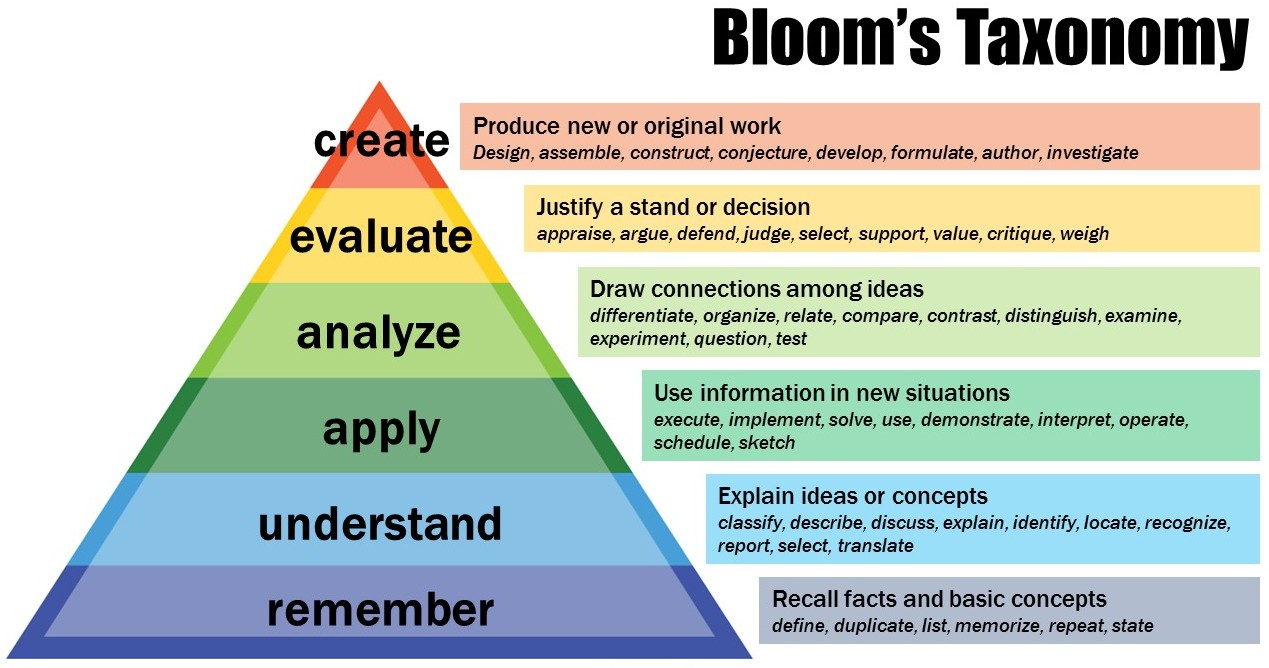


 Queerly Christian